


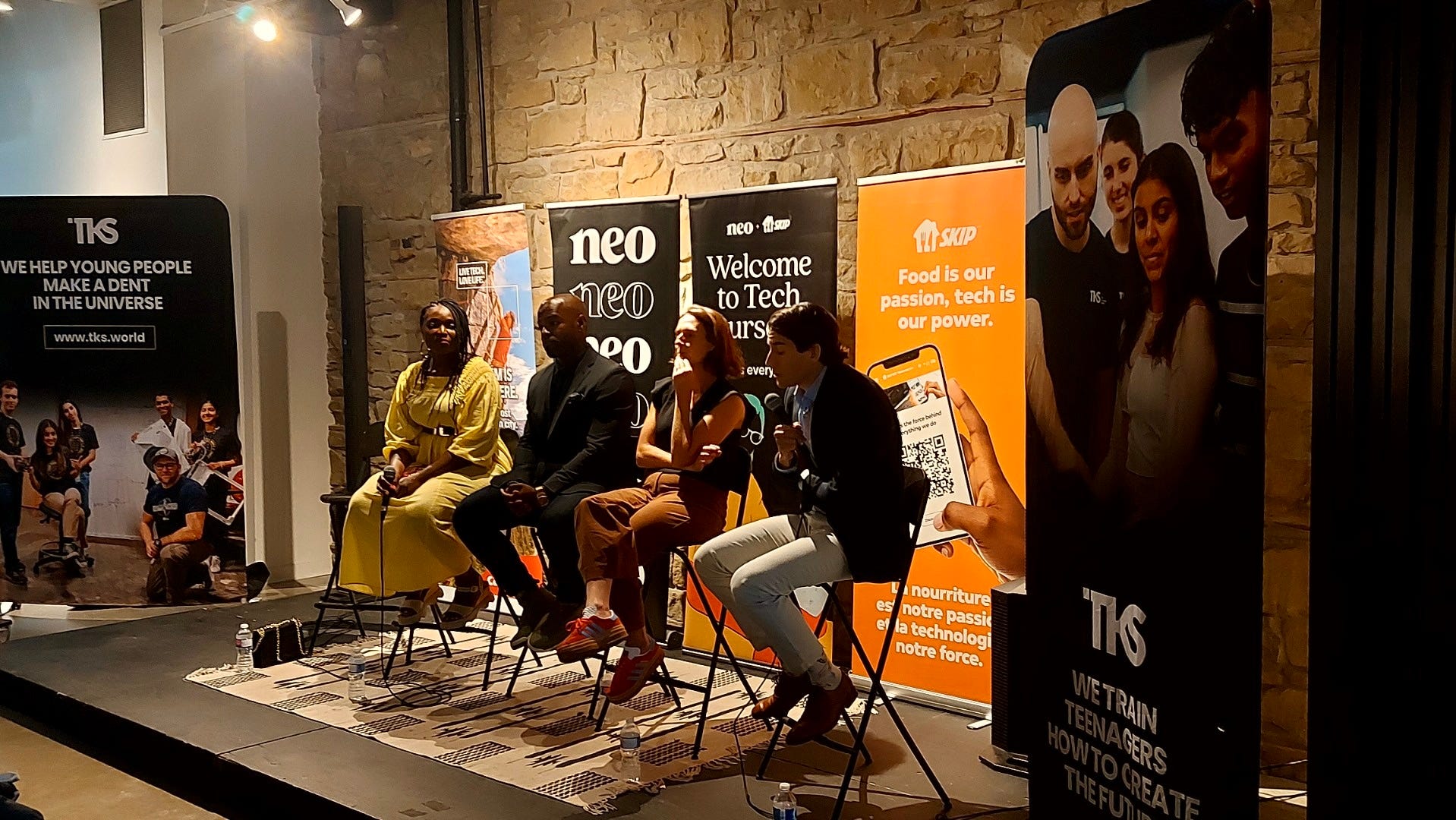
Last Thursday, we spoke with 3 founders who are building companies that seek to improve the Mental Health of their users. Our speakers were:
Ryan Todd, CEO at headversity
Jessica Renney, Co-Founder and Co-CEO at HONE Athletics
Jefferson Roc, CEO at PEERX.AI
Bukky Wonda, Founder at Shirah
This is a recap of the event’s top ideas and insights.
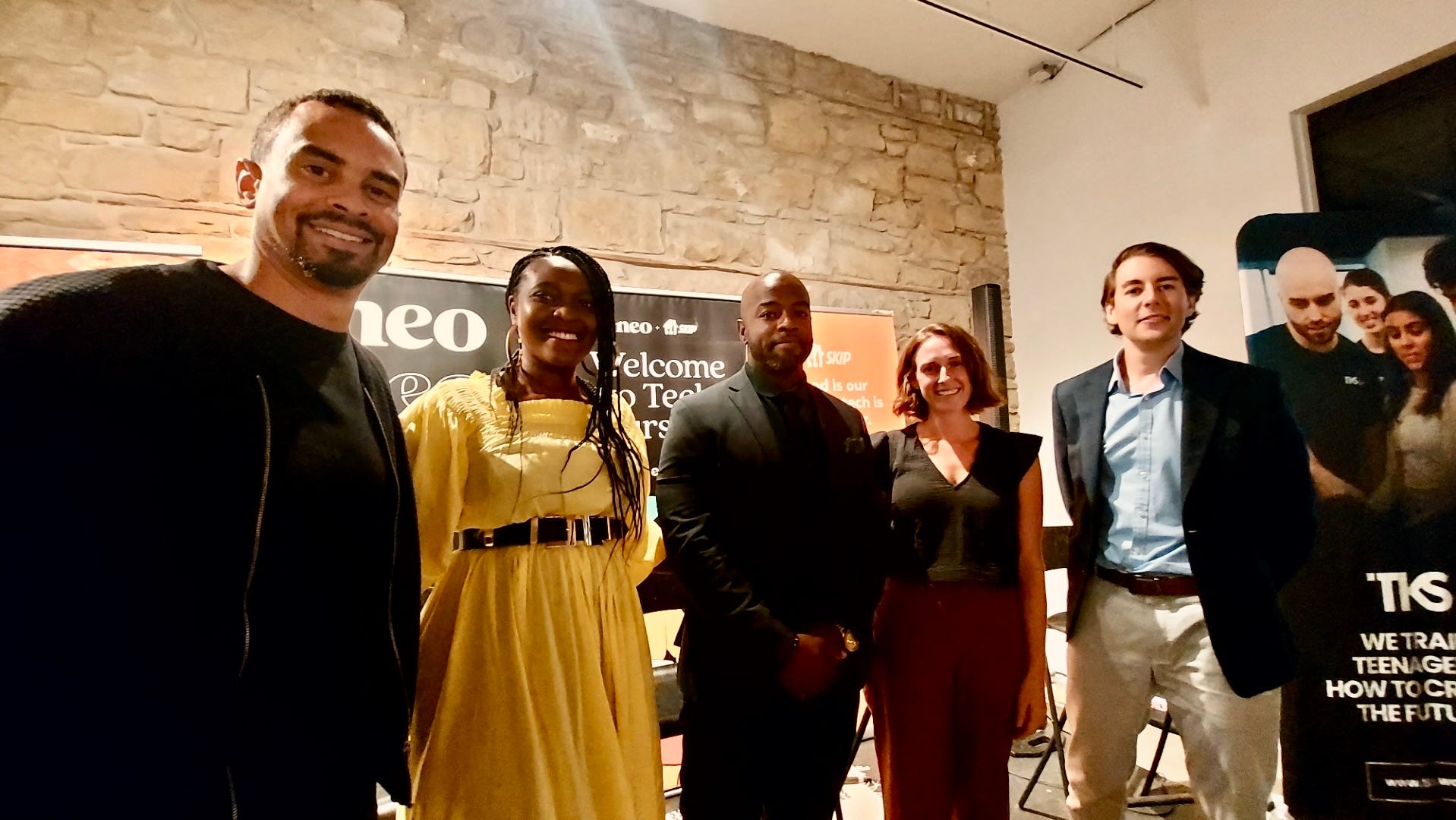
(From Left) Christopher Bruno, Bukky Wonda, Jefferson Roc, Jessica Renney, Ryan Todd.
What is the state of mental health in the Technology sector? 🤝
Tech often sets excessively high goals with immense pressure to hit them
Failing to meet these goals can affect mental well-being. Entrepreneurs face additional challenges, like financial strains, HR issues, and lack of management skills.
This is not dissimilar to athletes who face high expectations, criticism, and pressure.
Leaders need to be more aware of and responsive to the unique mental health challenges their teams face.
The Role of Leaders in Mental Health in the Workplace 👩💻
Leader’s set the tone and culture in the workplace, which greatly influence employees' mental well-being.
The environment and culture, not just individual factors, play a crucial role in workplace mental health.
The Impact of Social isolation in Hybrid and Remote Teams:
Social isolation is a growing problem, exacerbated by the shift to hybrid and remote work.
The U.S. Surgeon General identified loneliness as a major health concern, comparable to smoking 15 cigarettes a day.
Within in-person offices, casual interactions helps to create bonds and often naturally creates a positive workplace culture. Remote work has reduced these organic opportunities, necessitating deliberate actions to create connections.
Hybrid work environments require intentional efforts to maintain connections and foster a sense of belonging.
The Impact of COVID-19 on Social Isolation and Mental Health 🧠
COVID-19 forced extroverts into isolation.
A The Lancet study found increased anxiety and depression among young adults (18-22) and single mothers during COVID.
People without pre-existing social networks were more at risk for mental health issues.
Skills Deficit from COVID:
COVID led to a "de-skilling" of a generation, particularly in social skills due to lack of face-to-face interactions.
The pandemic has made it harder for people to navigate social situations, such as rejection or awkward conversations.
There is a need to reinvest in developing these interpersonal skills, especially for younger generations.
Workplace Automation & Leadership Challenges:
COVID accelerated workplace automation, with many organizations automating up to 60% of managerial roles.
Organizations now face the challenge of redefining leadership roles and ensuring leaders have the necessary soft skills.
There is a need for empathetic leaders who can navigate the hybrid work environment and address mental health concerns.
Self-Care’s role in Effective Leadership and the Importance of Co-Founders 👯♀️
Having a co-founder is invaluable for support and managing stress; solo founders are admired for handling the pressure alone.
Co-founder relationships are key to growth and mental well-being.
Self-Care’s role in Being an Effective Leader:
It's important to reconnect with one's humanness and take care of oneself to be effective in leadership.
Self-care practices include disconnecting from work at specific times and having routines like exercising and spending time with family.
Founders should enforce boundaries to prevent constant work-related stress.
Examples include turning off phones during family time and taking a day off weekly.
TL;DR
Impact of Unrealistic Expectations: Tech founders and employees face immense pressure to meet high goals, which can impact mental health. Leaders must be aware of these challenges and create supportive environments for their teams. Tools like Peer Support, Education, and Tracking can help address commonly faced-challenges.
Challenges of Hybrid and Remote Work: Social isolation, exacerbated by remote work, has become a major mental health concern. Leaders need to take deliberate actions to foster connections and a sense of belonging in hybrid work environments.
Workplace Automation & Leadership: COVID-19 accelerated workplace automation, redefining leadership roles. Organizations need empathetic leaders who possess the necessary soft skills to navigate hybrid work environments and address mental health concerns.
Importance of Co-Founders & Self-Care: Co-founders provide essential support in managing stress, while solo founders face additional challenges. Effective leaders prioritize self-care and establish boundaries to prevent burnout, ensuring they can lead effectively.